

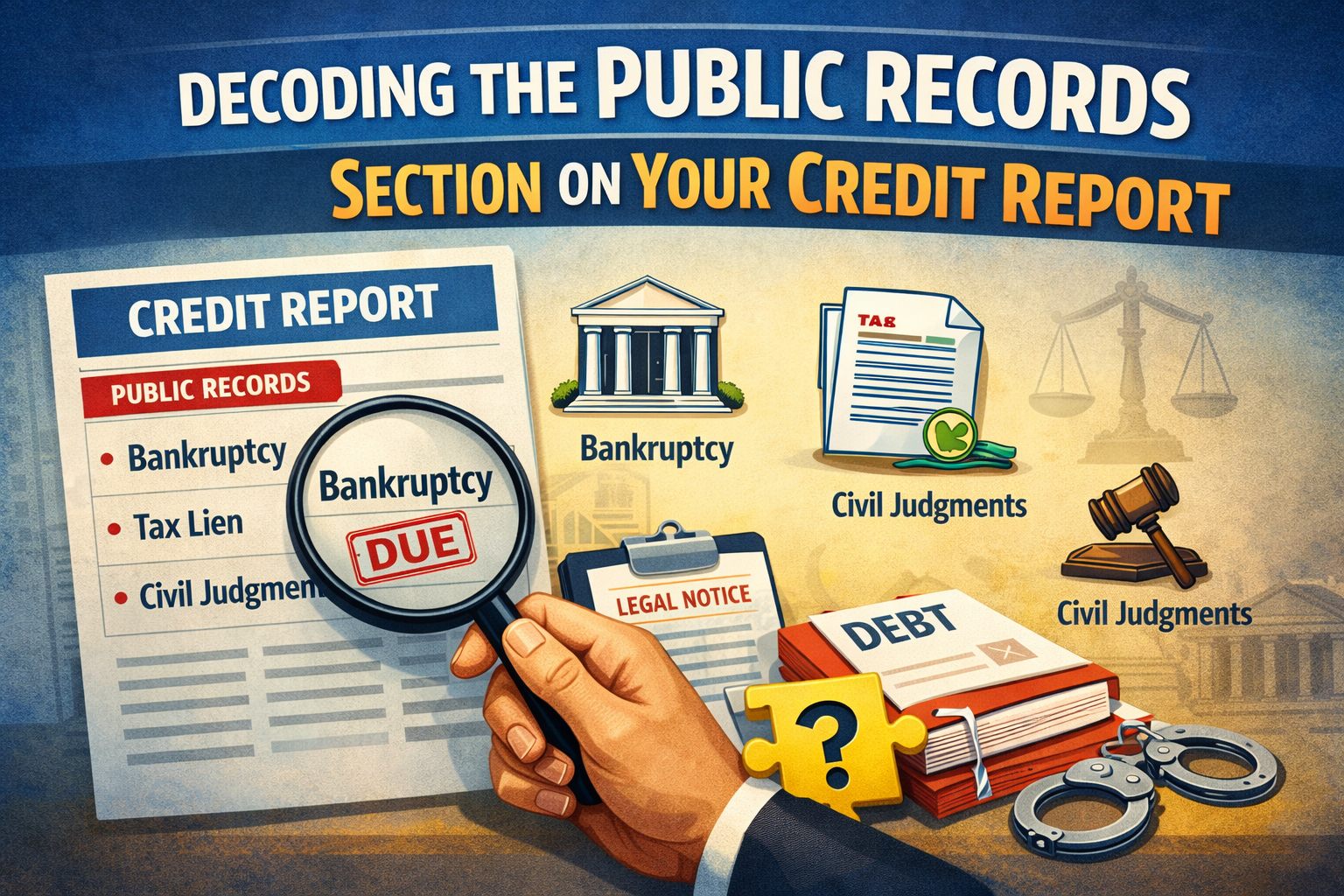
Welcome to SmartCreditTricks.com, your go-to resource for practical credit tips that can help you take control of your financial future. If you’ve ever pulled your credit report and felt overwhelmed by the “public records” section, you’re not alone. This often-misunderstood part of your credit history can hold key details about your past financial challenges, like bankruptcies, judgments on credit report, and tax liens on credit report. But what exactly stays on there, what gets removed, and why do judgments and liens often get ignored until they cause real problems? In this comprehensive guide, we’ll decode it all, sharing actionable credit tips to help you understand, manage, and potentially improve this section of your report. Whether you’re rebuilding after a setback or just aiming for a stronger credit score, these insights—drawn from real-world credit repair strategies—can make a big difference.
We’ll cover everything from the basics of public records on credit report to advanced tips on how to remove judgments from credit report or how to remove liens from credit report. By the end, you’ll have a clear blueprint for handling these items, just like the engaging, step-by-step advice we share across our blog. Let’s dive in and empower you to make smarter credit decisions.
Understanding the Public Records Section: A Credit Tip Foundation
The public records section on your credit report is essentially a log of legal financial events that are considered public information. This includes things like bankruptcy on credit report, civil judgments credit report, and various liens. Unlike your payment history or credit utilization, which come from lenders, public records are pulled from court documents and government filings. They’re reported by the three major credit bureaus—Equifax, Experian, and TransUnion—and can significantly impact your credit score if they’re negative.
Why does this matter? Public records signal to lenders that you’ve had serious financial issues, making you seem like a higher risk. For instance, a judgment on credit report might drop your score by 100 points or more, depending on your overall credit profile. But here’s a key credit tip: Not all public records are created equal, and many don’t even appear on reports anymore due to changes in reporting standards.
Back in 2017, the National Consumer Assistance Plan (NCAP) led to a major shift. The credit bureaus agreed to stop including most civil judgments and tax liens on credit reports because of inaccuracies in matching them to the right people. As a result, today, the only public record that consistently shows up is bankruptcy. If you’re seeing old judgments or liens lingering on your report, it could be an error— and that’s something you can challenge.
To get started, always pull your free annual credit reports from AnnualCreditReport.com. Look specifically at the public records section. If something looks off, note it down. This simple step is one of the best credit tips for spotting issues early.
What Stays on Your Public Records Section?
Not everything in the public domain ends up on your credit report forever. The Fair Credit Reporting Act (FCRA) sets strict timelines for how long negative information can remain. Here’s a breakdown of what typically stays and for how long:
- Bankruptcy on Credit Report: This is the big one that sticks around. Chapter 7 bankruptcies (liquidation) stay for up to 10 years from the filing date. Chapter 13 bankruptcies (repayment plans) linger for 7 years. Why so long? Bankruptcy is a major event, signaling to lenders that you needed court intervention to handle debts. Credit tip: While it’s there, focus on rebuilding with secured credit cards or credit-builder loans to show positive activity.
- Judgments on Credit Report: Pre-2018, civil judgments (court orders to pay a debt) would appear for 7 years. Now, they’re rarely reported unless they meet strict verification standards (like including your full name, address, and Social Security number or date of birth). If one does show up, it’s often an error. Unsatisfied judgments (unpaid) can indirectly hurt you since they’re public records lenders might search manually.
- Tax Liens on Credit Report: Like judgments, tax liens (government claims on your property for unpaid taxes) were removed from reports starting in 2018. Federal tax liens from the IRS or state tax liens no longer appear automatically. However, if unpaid, they remain public records, and lenders could discover them during deeper checks, like for mortgages.
Other items, like foreclosures or repossessions, might appear under accounts rather than public records, but they follow similar 7-year rules. Credit tip: If a public record is approaching its expiration, monitor your report closely—bureaus should remove it automatically, but disputes can speed things up if needed.
What Goes: How Public Records Get Removed
The good news? Many public records fade away over time or can be actively removed. Understanding the “what goes” part is crucial for credit repair. Here’s how it works:
- Automatic Removal After Time Limits: As mentioned, most negative public records drop off after 7-10 years. For example, a satisfied judgment (one you’ve paid) might be removed sooner in some states, but federally, it’s 7 years.
- Disputing Inaccuracies: If a public record is wrong—say, a judgment that’s not yours or a lien that’s been paid but still shows—file a dispute with the bureaus. Provide proof, like court documents or payment receipts. Under the FCRA, they must investigate within 30 days. Credit tip: Use certified mail for disputes to track everything, and follow up if needed.
- Vacating Judgments: For judgments on credit report, you can sometimes get the court to “vacate” (cancel) them if there was a procedural error, like improper service. This erases the judgment entirely, removing it from public records and your credit report.
- Withdrawing Liens: For tax liens on credit report, the IRS offers a “Fresh Start” program. If you’ve paid the lien or entered an installment agreement, you can request a withdrawal using Form 12277. This removes the lien from public records, ensuring it doesn’t affect future lender searches.
Credit tip: Always keep records of payments or settlements. These are your ammunition for removals. If you’re overwhelmed, consider consulting a credit repair service, but beware of scams—legitimate ones can’t remove accurate info.
The Often-Ignored Impact of Judgments and Liens
Judgments and liens are frequently overlooked because they no longer directly appear on credit reports. But ignoring them is a mistake. Here’s why they matter and how to handle them:
- Judgments on Credit Report: A civil judgment credit report entry means a court ruled you owe money, often from unpaid debts like credit cards or medical bills. Even if not on your report, unpaid judgments can lead to wage garnishment or asset seizures. Ignored, they accrue interest, growing the debt.Credit tip: Negotiate a “pay for delete” with the creditor. Pay the judgment in full or settle for less, in exchange for them updating records as “satisfied.” Then, dispute any lingering report entries.
- Tax Liens on Credit Report: These arise from unpaid taxes and give the government priority over your assets. Ignored, they can block property sales or refinances. State tax liens might be more aggressive than federal ones.Credit tip: Pay off the lien promptly. Use IRS installment plans if you can’t pay in full. Once paid, request withdrawal to clear public records.
Many people ignore these because they think “out of sight, out of mind” since they’re off credit reports. But lenders for big loans (mortgages, auto) often run public records searches. A hidden lien could derail approval. Pro tip: Run your own public records check via county clerks or services like LexisNexis before applying for credit.
Step-by-Step Credit Tips to Clean Up Your Public Records
Ready to take action? Here’s a blueprint for decoding and improving your public records section, inspired by proven credit repair strategies:
- Review Your Reports: Get free reports from all three bureaus. Scan for public records. Note dates, amounts, and statuses.
- Identify Errors: Is the info accurate? Check for mismatches in names, amounts, or dates. Old items beyond 7-10 years should be gone.
- Gather Documentation: Collect court papers, payment proofs, or IRS letters.
- File Disputes: Online via bureau websites or by mail. Be specific: “This judgment is paid; see attached satisfaction.”
- Negotiate Settlements: Contact creditors for judgments or liens. Offer lump sums for deletions.
- Monitor Progress: Check reports 30-60 days after disputes. Re-dispute if needed.
- Rebuild Credit: While waiting, add positive history. Use credit-builder accounts or become an authorized user on a good card.
Table: Public Records Timeline and Removal Tips
| Public Record Type | How Long It Stays | Removal Tip |
|---|---|---|
| Bankruptcy (Ch. 7) | 10 years | Wait it out; focus on new positive credit. |
| Bankruptcy (Ch. 13) | 7 years | Same as above; rebuild faster post-discharge. |
| Judgments | 7 years (if reported) | Vacate or satisfy; dispute inaccuracies. |
| Tax Liens | Not reported | Withdraw via IRS Form 12277 after payment. |
| Civil Judgments | Not reported | Check public records; settle to avoid garnishments. |
Credit tip: If bankruptcy is on your horizon, consult a lawyer. Filing can stop collections but leaves a long mark.
Common Myths About Public Records Debunked
Myth 1: “Public records don’t affect my score anymore.” Reality: While judgments and liens are off reports, bankruptcies still do, and lenders can find others.
Myth 2: “I can remove accurate info.” No, only inaccuracies. But you can mitigate impacts.
Myth 3: “Bankruptcy ruins credit forever.” It hurts, but scores can recover to 700+ in 2-3 years with effort.
Credit tip: Stay informed—subscribe to credit monitoring for alerts on changes.
Advanced Strategies for Handling Judgments and Liens
For deeper dives:
- How to Remove Judgments from Credit Report: If reported erroneously, dispute with proof. For valid ones, pay and request updates.
- How to Remove Liens from Credit Report: Since they’re not reported, focus on public records withdrawal. For property liens, title searches are key.
Credit tip: Use apps like Credit Karma for simulations—see how removals might boost your score.
Preventing Future Public Records Issues
The best fix is prevention:
- Pay taxes on time.
- Settle debts before lawsuits.
- Monitor credit monthly.
Credit tip: Build an emergency fund to avoid defaults leading to judgments.
Final Thoughts: Empower Your Credit Journey
Decoding the public records section isn’t just about what stays or goes—it’s about taking control. By addressing judgments and liens head-on, you can clear hurdles and build stronger credit. At SmartCreditTricks.com, we’re all about these practical tips to help you thrive financially. Implement these strategies, and watch your score improve.